Breakdowns / Ground fielding, run-outs and catching
Fielding: attack, pick up, throw, catch
Clarke, Jadeja, Symonds, Rhodes, Phillips and Stokes, frame by frame: getting low to the ball, picking up and throwing in one move, and the shape of a diving catch. No angles, no speeds.
Illustrative analysis. Independent technical commentary by BatSwing, built from short excerpts of official ICC and cricket.com.au clips, credited under each picture. Not affiliated with or endorsed by the players or broadcasters. Qualitative only: no angles, no speeds, no distances.
Batting and bowling have a vocabulary coaches share. Fielding has one too, and it is easier to see than to describe. The best fielders look as if they have more time than everyone else. Slow the pictures down and that “time” turns out to be a handful of habits you can see and coach: they attack the ball, they get low early, they pick up and throw in one movement, and when they dive for a catch they are already balanced and watching the ball before they leave the ground.
The fielders, and the footage each one comes from:
| Fielder | What we look at | Footage |
|---|---|---|
| Michael Clarke | Pick-up and throw on the run | cricket.com.au, “Lethal left arm! Michael Clarke’s direct-hit run outs” |
| Ravindra Jadeja | Chase, pick-up, turn and throw | ICC, “WICKET: Malik run out by Jadeja for 15” |
| Andrew Symonds | Pick-up and underarm run-out at close range | cricket.com.au, “Don’t run on this arm: The best of Andrew Symonds in the field” |
| Jonty Rhodes | Running the ball in and diving at the stumps | ICC, “48 Days to Go - Jonty Rhodes Super Man run-out ‘92” |
| Glenn Phillips | Ready position and a diving catch | ICC, “Glenn Phillips doing Glenn Phillips things, PAK v NZ, Champions Trophy 2025” |
| Ben Stokes | A catch in the deep | ICC, “CWC19: Eng v SA – Stokes defies logic to grab a stunner in the deep” |
Every skeleton below is an automatic 2D estimate from a pose model, drawn on the video in cyan with the picture behind it dimmed. The moments under each frame (the pick-up, the release, the dive) were marked by eye, frame by frame. Several clips are the broadcaster’s slowed replays and the cameras follow the play, so nothing here says anything about how fast anyone moved or how far they went. They are pictures to talk about, not measurements.
Ground fielding: attack, get low, pick up
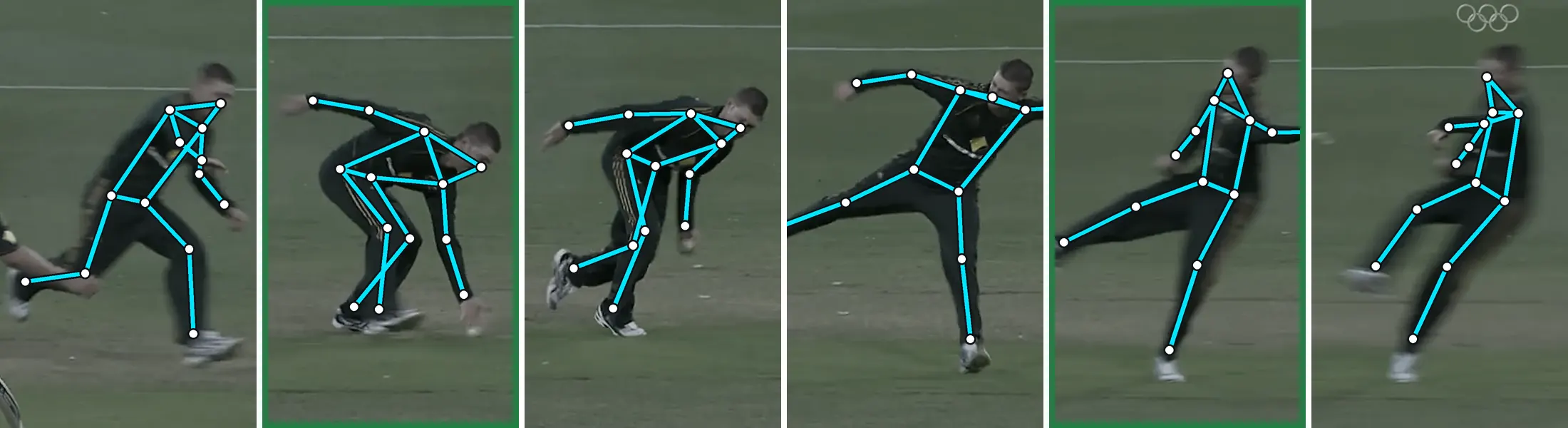
A ball hit into the ring gives the batters a choice: run or stay. Good fielders take that choice away by closing the gap before the ball arrives. Watch Clarke: he comes in hard, and by the time the ball reaches him his hips are already down and his feet are wide. He does not stoop from a standing run. He bends his knees and lowers his whole body, so the hand meets the ball beside the foot with his eyes close above it.
- Attack the ball
- Pick-up
- Ball in hand
- Arm back
- Release
- Follow-through
The second thing to see is that the pick-up and the throw are one movement. The ball comes up from the ground, goes straight back past his ear and is gone, with no stop in between to stand up and set his feet. He throws off one leg with the other swinging up behind him, and the body keeps falling towards the target after the ball has left. That is a whole-body throw, not an arm on its own. On a phone, swipe a strip sideways to see all six frames.
Pick up, turn, throw
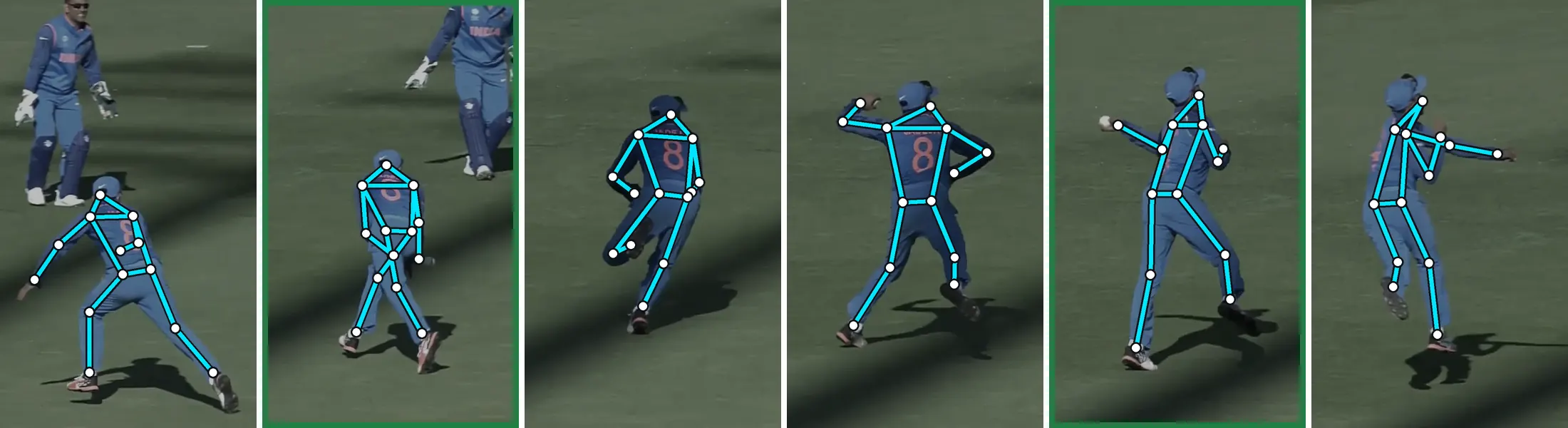
Jadeja’s run-out starts with the ball going away from him. He chases it, gets his body down on the run and picks it up on the move, then turns and throws in the same flow. The turn is the moment to watch: his feet are already turning towards the stumps while he is still gathering the ball, so by the time he is upright he is side-on to the target with the throwing arm back.
- Attack the ball
- Pick-up
- Turn
- Arm back
- Release
- Follow-through
A coach will recognise the shape: front shoulder pointing at the target, throwing hand high and behind, the front foot stepping towards the stumps. Jadeja gets there in a couple of steps, not by stopping and resetting.
Close to the stumps: keep it simple
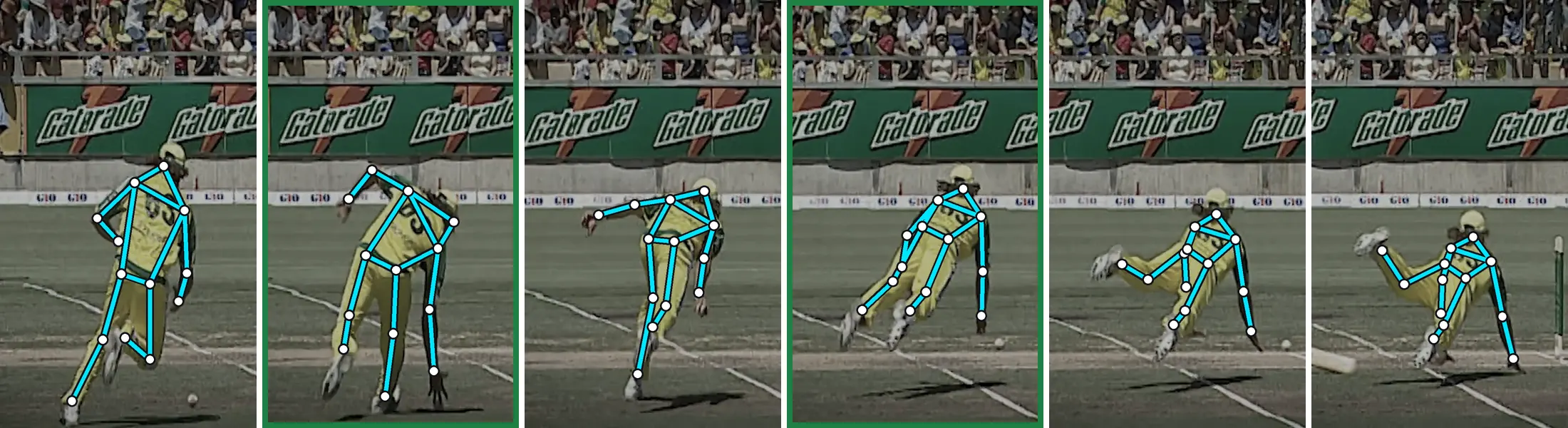
Not every run-out needs a throw. When Symonds picks up close to the stumps he does not wind up at all. He picks up low beside his front foot, runs at the stumps with the ball in his hand and lets it go underarm from right next to them as he dives, so the ball has almost no distance to travel.
- Attack the ball
- Pick-up
- Ball in hand
- Underarm release
- Dive
- Landing
Run it in and dive: Rhodes
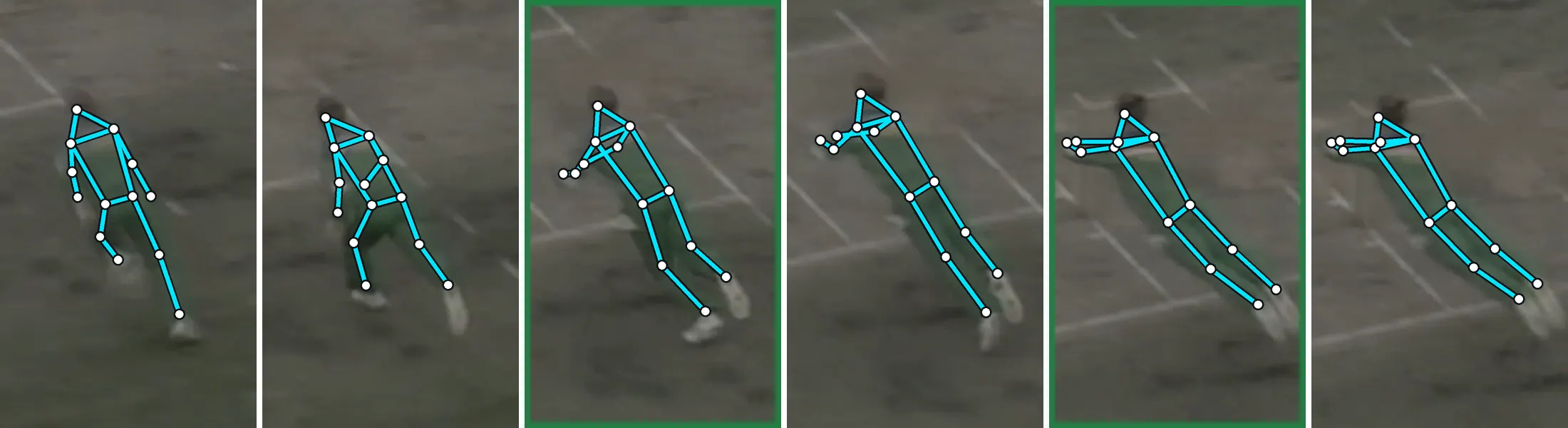
Sometimes the fielder is nearer the stumps than any throw could be accurate from, and the quickest way to hit them is to take the ball there. Rhodes’ run-out from 1992 is one of the best-known pictures in fielding. Slowed down, it is a sprint, one last driving stride and a dive with the whole body stretched out flat, arms reaching ahead of the head. He commits fully: there is no half-dive and no braking before take-off.
- Run in
- Last stride
- Take-off
- Arms reach
- Full stretch
- Flying
Note what makes this safe enough to copy in training: he is leaning forward before he takes off and he leaves the ground going forwards, not upwards. For newer fielders, the same idea works without the dive: run the ball in and break the stumps with the ball in hand.
Catching: ready early, hands soft, eyes on the ball
Two catches, two very different shapes, and the same habit underneath: the fielder is balanced and watching the ball before the body does anything spectacular.
Phillips starts in a proper ready position: feet apart, knees bent, weight forward on the balls of the feet, hands low and open in front of him. When the ball is hit he pushes off, reaches up with one hand and takes it above his head while he is already falling. The reach comes out of the ready position; he is not standing up straight when the ball is hit.
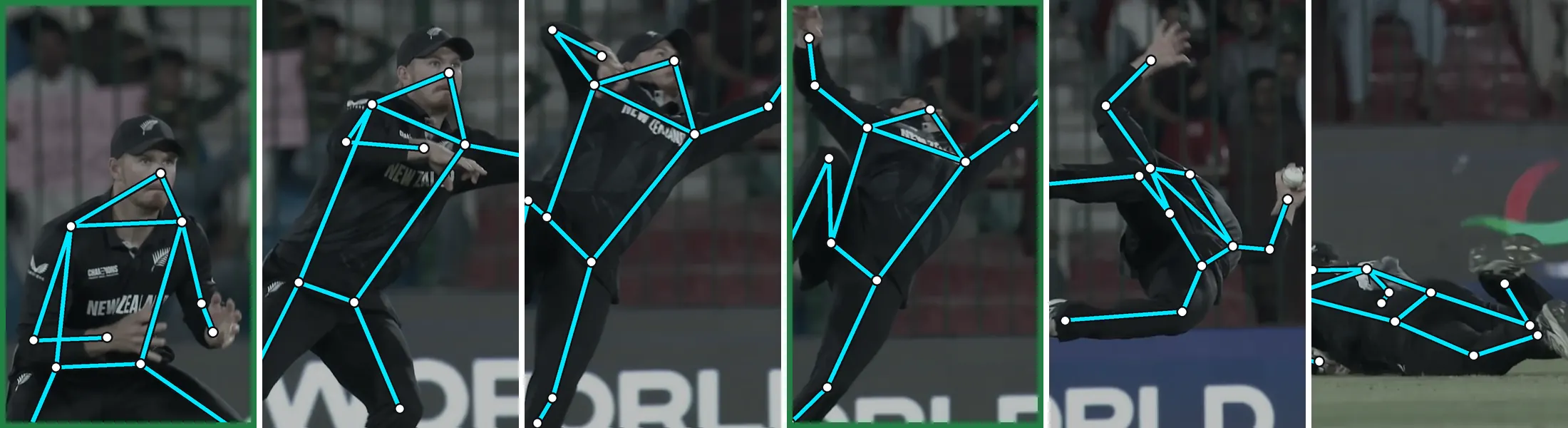
- Ready
- Push off
- Reach
- Catch
- Falling
- Landing
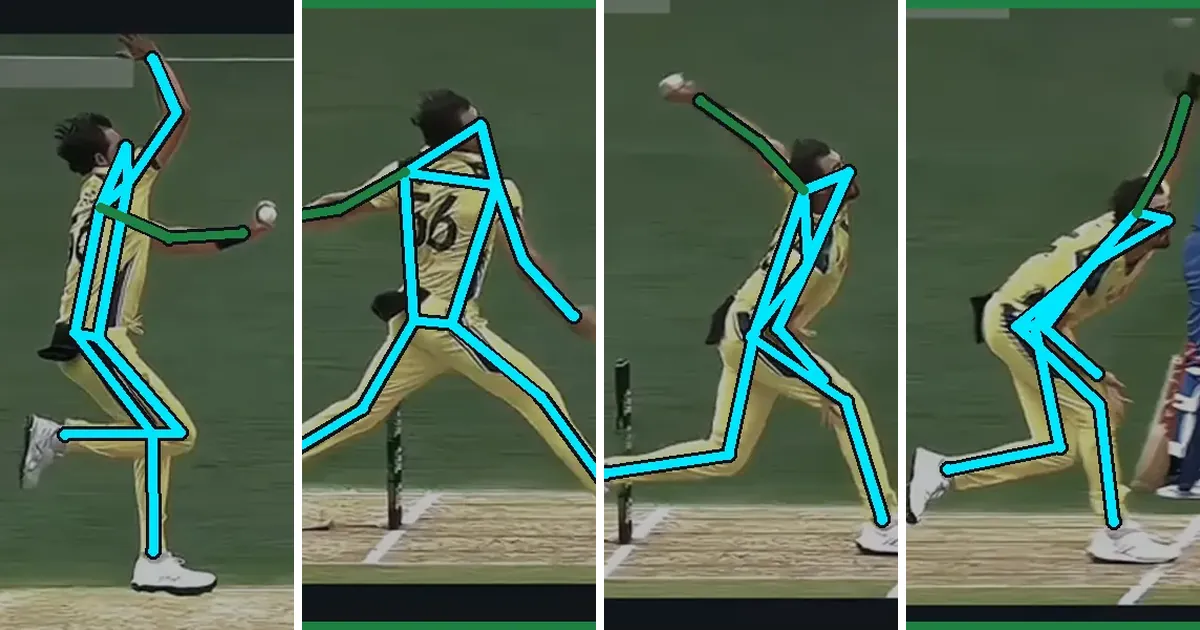
Stokes is fielding in the deep. He leaps with his hand stretched above his head, takes the ball one-handed in the air and then has to come down and roll. Look at what happens after the catch: the arm with the ball comes in towards the body as he lands, and he gets up with the ball still in his hand. The catch is not finished until the fielder is up and in control.
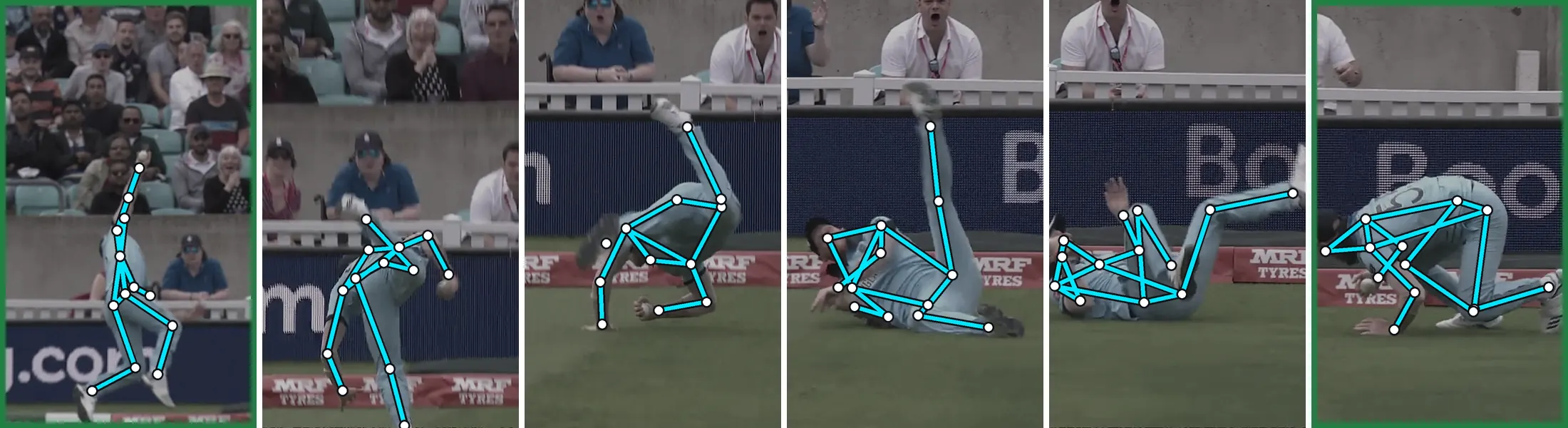
- Leap, hands up
- Ball in hand
- Landing
- Roll
- Feet over
- Ball safe
For a coach, the useful part is the start and the end, not the dive. Is the fielder set and still when the ball is hit? Do the eyes stay on the ball into the hand? And after landing, is the ball held in to the body?
What a coach would take from this
- Attack, then get lowClose the gap first, then lower the hips, not just the head. The hand should meet the ball beside the foot with the eyes above it.
- Pick-up and throw are one moveLook for a fielder who stops, stands up and then throws. The best ones turn while they gather and throw from the pick-up position.
- Be set before the ball arrivesCatches are made in the ready position: weight forward, hands up, still head. The dive comes out of that, not instead of it.
What one phone can show at your academy
None of this needs a broadcast camera. One phone on a tripod, side-on to a fielding drill, shows the same moments: how low the fielder is at the pick-up, whether the pick-up and the throw join up, which way the feet turn and whether the fielder is balanced and still before a catch.
Things a coach can check, frame by frame, with one phone:
- At the pick-up: are the knees bent and the hips down, or is the fielder bending only at the waist? Is the ball picked up beside the front foot, with the eyes over it?
- Between pick-up and throw: is there a pause to stand up and reset? Do the feet start turning to the target during the gather?
- At the release: is the front shoulder pointing at the target? Does the body keep moving towards it after the ball has gone?
- Before a catch: is the fielder set, weight forward and hands ready, when the ball is hit? Is the head still as the ball arrives?
- On a dive: do the eyes stay on the ball all the way into the hands, and does the fielder land on the side and roll rather than on the elbows?
Drills that work with that set-up:
- Attack and pick up. A feeder rolls balls along the ground; the fielder runs in, picks up beside the front foot and stops there. Film side-on and look at the hips at the pick-up.
- Pick up and throw at one stump. The same feed, but the fielder throws at a single stump from where they picked up, with no extra steps. Film side-on to see whether the pick-up and the throw join up.
- Chase, turn, throw. Roll the ball away from the fielder, who chases, picks up on the move and turns to throw. Film from behind to see which way the feet turn.
- Close-in underarm. From a few strides out, run in, pick up and flick the ball underarm at the stumps without stopping.
- Ready-position catching. A feeder hits or throws catches to either side from close range; the fielder must be set, weight forward and hands up, before each one. Add dives on to soft mats when the ready position is consistent.
We’re building BatSwing for academy nets sessions, and fielding is not in the product. Until it is, use these pictures as a vocabulary for your sessions; the coach is still the one who calls it.
Sources
- cricket.com.au, "Lethal left arm! Michael Clarke's direct-hit run outs", cricket.com.au. Derived stills of one run-out.
- ICC, "WICKET: Malik run out by Jadeja for 15", icc-cricket.com. Derived stills.
- cricket.com.au, "Don't run on this arm: The best of Andrew Symonds in the field", cricket.com.au. Derived stills of one run-out.
- ICC, "48 Days to Go - Jonty Rhodes Super Man run-out '92", icc-cricket.com. Derived stills.
- ICC, "Glenn Phillips doing Glenn Phillips things | PAK v NZ | Champions Trophy 2025", icc-cricket.com. Derived stills.
- ICC, "CWC19: Eng v SA – Stokes defies logic to grab a stunner in the deep", icc-cricket.com. Derived stills.
This is an independent technical analysis produced by BatSwing for editorial and commentary purposes. It is not an official assessment, endorsement or ranking, and is not affiliated with or endorsed by the players, their management, any board, any team or any broadcaster. Skeletons, traces and strips are derived illustrations made from short excerpts of publicly broadcast footage for critical commentary; all rights remain with the rights holders. Takedown requests can be sent to [CONTACT EMAIL] and are actioned within 24 hours.
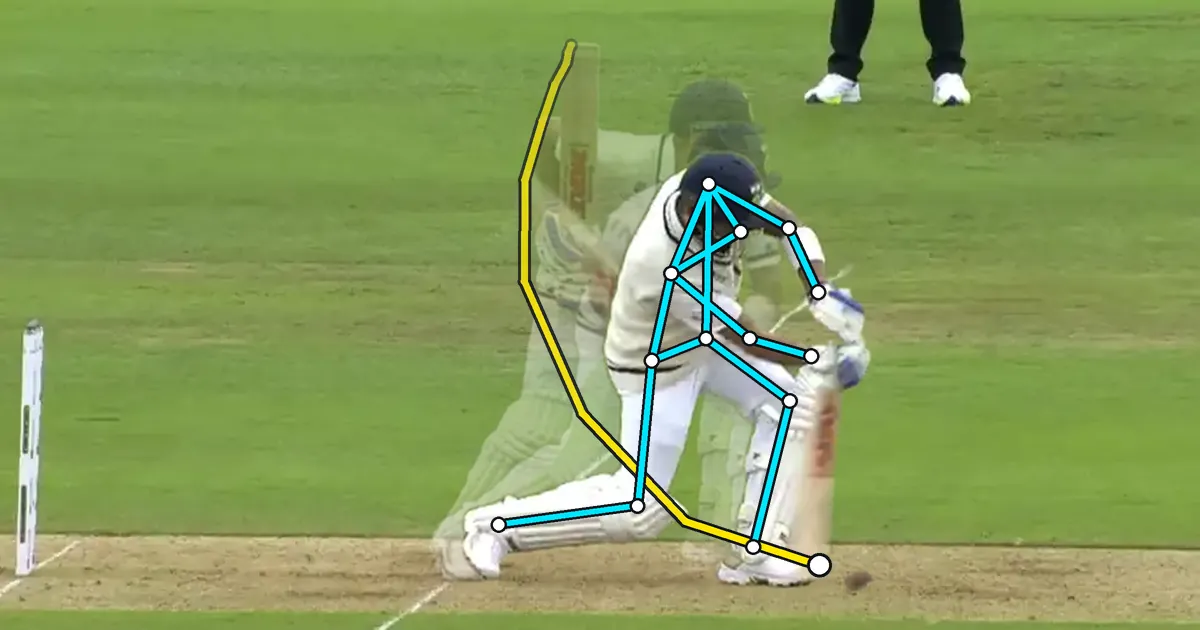
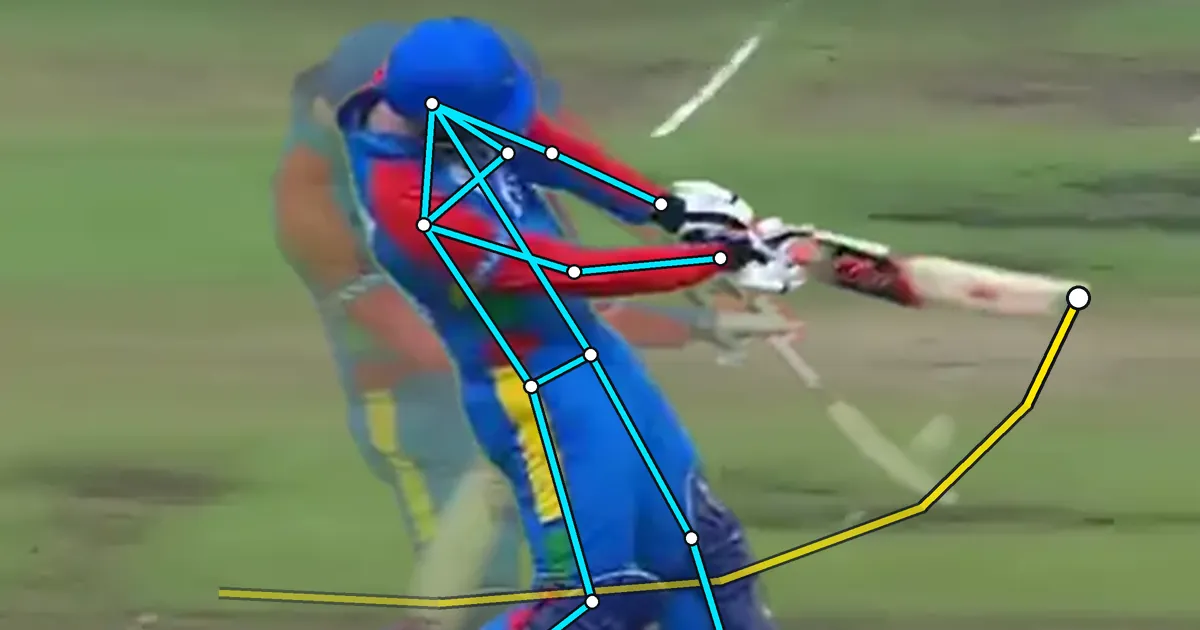
Want to see what BatSwing does with an academy session?
These breakdowns are made by hand from broadcast footage. BatSwing itself is different: one phone at your nets, a ball sheet your coach confirms, and progress your players can see.
Book a demo →